
A house can have the prettiest finishes and the newest appliances in the world, but none of that matters if the foundation underneath it isn't solid. Foundation problems aren't just a cosmetic headache. They can put your family's safety at risk.
Foundation issues are serious because they rarely stay contained to one area of the house. Left unaddressed, they tend to spread into structural damage, mold growth, water intrusion, and even pest entry points throughout the home.
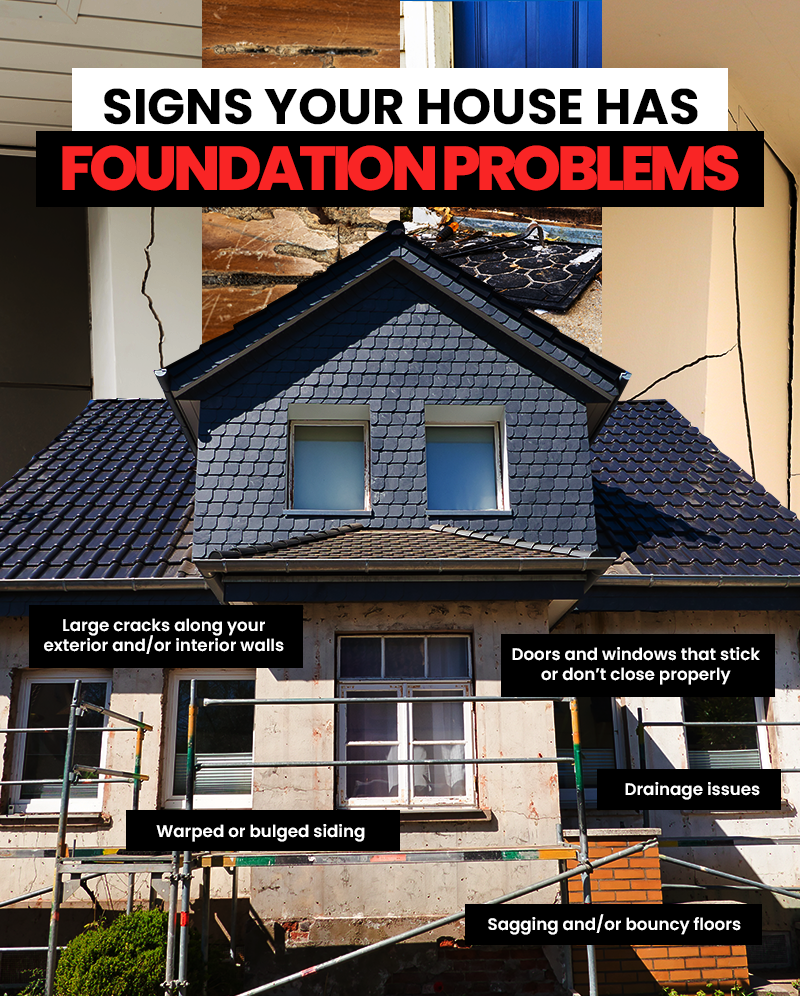
For homeowners, it's crucial to know that foundation problems can come with all sorts of warning signs. The earlier you address these issues and have them fixed, the more likely you are to reduce repair costs and avoid serious damage to the rest of your house.
For buyers searching for their dream home, know that issues with the foundation can only be revealed after a home inspection. Many homeowners are often unaware of foundation problems, or else they should’ve disclosed that information to you when you first viewed the home. It’s important to know whether these foundation issues are minor speed bumps or major dealbreakers on your road to homeownership.
What are the common warning signs of foundation problems?

Small hairline cracks in the foundation or along interior walls are usually nothing to worry about. Most homes settle a little over time, and minor cracking is part of that normal process. What changes the picture is a horizontal crack, or any crack wider than a quarter inch that keeps growing or lengthening. Those are signs of something more serious happening below the surface, and they tend to get worse with time as water and insects find their way into the gap.
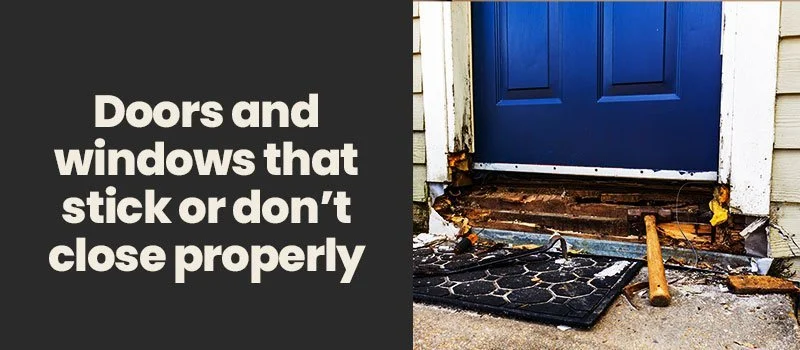
Doors and windows that stick are sometimes just a humidity issue, since Houston's heat and moisture cause wood to swell during the warmer months. But if your doors and windows have been sticking year-round with no real change in weather, the foundation is the more likely culprit. As a foundation settles or shifts, it throws the framing around doors and windows out of alignment, and you may even notice window frames pulling away from the surrounding brick.

Warped, buckled, or bulging siding is another sign worth paying attention to. So are visible gaps between siding planks or brick. Both point to movement happening underneath, and both tend to get more noticeable the longer they're left alone.

Floors that sag or feel uneven underfoot are a safety concern as much as a cosmetic one. This typically happens when the foundation shifts enough to separate support beams and compress the walls above them. Bouncy or spongy flooring, especially paired with popping or creaking sounds, often points to either foundation settlement or a moisture problem in the crawl space.

Drainage is one of the simplest things a homeowner can check on their own. After a good rain, walk the perimeter of your house and watch where the water goes. If you see pooling near the foundation, that's a drainage issue, and over time it can do real damage to the foundation underneath.
Bottom line: what should homeowners and buyers do about foundation issues?
If you're a homeowner, bring in a professional.
Foundation problems are not a do-it-yourself project, no matter how handy you are. The most useful thing a homeowner can do is document what they're seeing and bring in a licensed foundation repair specialist to assess the damage. They'll be able to tell you whether the foundation is at risk or whether it's a manageable repair.
If you're a buyer, should you walk away from a home with foundation issues?
A foundation problem discovered during inspection will almost always delay closing, and lenders tend to get cautious about financing a home with known foundation issues. The first call you should make is to your real estate agent. In many cases, there's room to negotiate with the seller to cover repair costs, and that outcome can actually work out in your favor. If the seller hires a reputable foundation repair company and that company offers a transferable warranty, you end up with a home that's arguably in better shape than one that's never had foundation work at all, since you now have documented repairs backed by a warranty that follows the house. But if the damage is extensive, or the seller won't budge on paying for it, walking away and continuing your search is often the smarter move.