One of the easiest — and most affordable — ways to refresh your home is a fresh coat of paint. But if you've ever stood in a paint aisle staring at hundreds of swatches, you know the decision is rarely simple. Whether you're updating a single room, renovating your home in The Woodlands or Cypress, or getting ready to list your property in the Northwest Houston market, choosing the right paint color matters more than most people realize.
At Great Houston Properties, Jason Gracey works with buyers and sellers across Northwest Houston every day — and paint choices come up constantly. Here's what you need to know to get it right.

How Do You Choose a Paint Color That Works With What You Already Have?
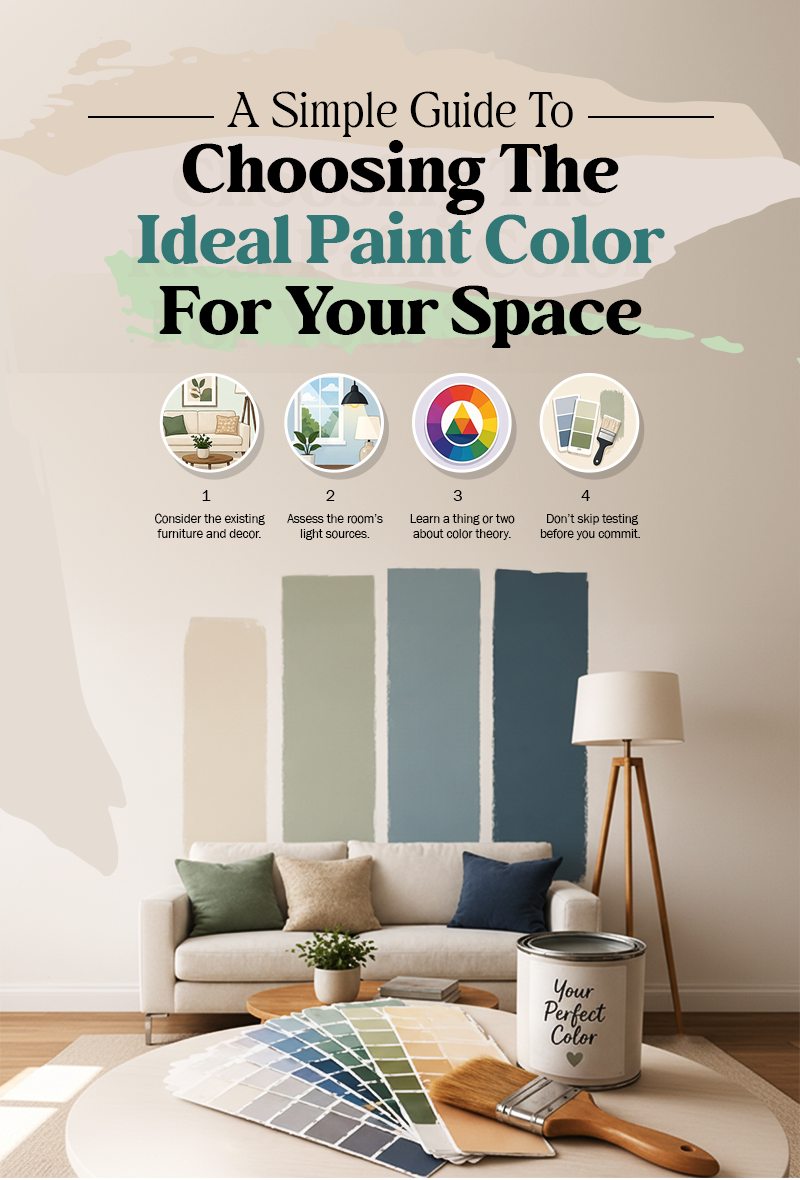
Before you even look at a color swatch, take inventory of your existing elements — furniture, flooring, fixtures, and major accessories. Your new wall color needs to work with what's already in the room, not fight against it.
If your furniture and decor lean neutral, this is your chance to bring in a bold, vibrant color and create a statement. If your home already has a lot of color, pulling back to a more neutral hue creates cohesion and visual rest. And if you have a statement piece — a large piece of art, a bold sofa, a custom piece of cabinetry — your wall color should enhance or contrast it without competing for attention.
Jason Gracey's rule of thumb: Paint is far easier to change than furniture. If you're in the middle of furnishing a room, wait until most of your major pieces are in place before committing to a wall color. Or choose a versatile neutral that can adapt as your space evolves.

Why Does Paint Color Look Different Once It's on the Wall?
This is one of the most common frustrations homeowners across Cypress, Katy, and Conroe experience. A color looks perfect in the store — then completely different at home. The culprit? Light.
Paint color and light are inseparable. The same shade can look dramatically different depending on the time of day, the direction your room faces, and the type of bulbs you're using.
How Does Natural Light Affect Paint Color in Houston Homes?
In Houston's climate, where sunlight is intense and year-round, understanding how your room is oriented makes a real difference.
North-facing rooms receive less direct sunlight and tend to feel cooler. Compensate with warmer paint tones — creams, tawny neutrals, or soft terracottas — to prevent the space from feeling cold or flat.
South-facing rooms are the sunniest in the home. Cooler tones like soft blues, sage greens, and light grays look vibrant in full sun without making the space feel overstimulating.
East-facing rooms catch morning light. Warmer palettes work well here to offset the lower light levels you'll have during evening hours.
West-facing rooms glow in the afternoon and evening. Cooler paint tones help balance that warm sunset light, especially in rooms you use most in the evenings.
Not sure which direction your room faces? Google Earth is a simple and free tool to check.
How Does Artificial Light Change Paint Color?
The type of bulbs in your fixtures will shift how your wall color reads — sometimes dramatically.
Fluorescent bulbs run cool and emphasize blues and greens.
Incandescent bulbs cast a warm yellow glow that enhances reds, oranges, and yellows.
LED bulbs are the most flexible and pair well with most paint colors.
Halogen bulbs most closely mimic natural daylight and give the truest color rendering.
Before you finalize a paint color, turn on every light source in the room and observe how the sample reads under each one. If you're mid-renovation, try to get your lighting installed before you paint — it will save you from surprises.

What Is Color Theory and Why Does It Matter When Painting a Room?
Color theory is the study of how colors relate to one another and the psychological effects they create. It's not just art school knowledge — it's genuinely useful when you're standing in front of a wall wondering why something feels off.
Here's the simplified version:
Warm colors (reds, oranges, yellows) feel energizing and cozy — great for living rooms and dining rooms.
Cool colors (blues, greens) are calming — ideal for bedrooms and bathrooms.
Neutral colors (whites, grays, beiges) provide versatility and balance — and remain the most popular choices in Houston-area resale homes for a reason.
Understanding complementary colors (opposites on the color wheel that create contrast) and analogous colors (neighbors on the color wheel that create harmony) gives you a framework for making intentional choices rather than guessing.

Should You Test Paint Colors Before Committing to a Full Room?
Absolutely — and skipping this step is one of the most common and costly mistakes homeowners make.
Skip the tiny one-inch swatches from the fan deck. They're nearly useless at scale. Instead:
Get large sample sheets and compare them side-by-side in the actual room.
Narrow your options, then purchase small sample jars.
Paint a generous test section — at least 12x12 inches — directly on the wall.
Observe it at different times of day: morning, midday, evening, and under artificial light.
Yes, it takes a little extra time. But it's the step that separates confident paint decisions from expensive regrets.
Thinking About Selling Your Home in Northwest Houston?
Paint choices matter to buyers. Jason Gracey has helped hundreds of homeowners across The Woodlands, Cypress, Conroe, Katy, Fulshear, and Sealy prepare their homes for the market — and the right paint strategy can meaningfully affect how quickly your home sells and at what price.
If you're preparing to list and want to know which updates are worth making before you go to market, reach out to Jason Gracey at Great Houston Properties. He'll give you an honest, experienced perspective on what Northwest Houston buyers are actually looking for.
Jason Gracey is a licensed real estate broker and the founder of Great Houston Properties, serving buyers and sellers across Northwest Houston — including The Woodlands, Cypress, Conroe, Katy, Fulshear, and Sealy.